Showing posts with label Reviews. Show all posts

Tuesday, 21 April 2015

Mad Men - the final season review

Just in time to rekindle viewers' interest, Mad Men gets back on track for one last season, revisiting its steady, deliberate pace and style on its way to a sure-to-be-compelling climax. Note: Mad Men's 14-episode final season has been split into two parts, much like its powerhouse network AMC did with the last season of its other flagship drama Breaking Bad to milk it out another year, returning this year for the second half, which is all I have reviewed here.


"Severance"

Mad Men took the jump into the 1970s after taking audiences from 1960 to 1969 in just seven years as it began its final stretch of episodes before the finale. There's a feeling that creator Matthew Weiner isn't quite grasping just how little airtime he has left for his advertising saga as he shoehorned in dream sequences and the death of a minor character at best from seasons ago. I am, however, on a positive note, glad that Don Draper (the brilliant Jon Hamm, who still criminally has yet to win an Emmy) is back at the forefront of the show that began as primarily his story, as in recent years he's taken a backseat to supporting characters like Joan (Christina Hendricks) and Peggy (Elisabeth Moss) to develop - not that there's anything wrong with that, they are great characters and two of my personal favourites.


But at the end of the day, it's Don's show. That's how it began and that's how it should end. This week's focus on Ken Cosgrove (Aaron Staton) as he lost his job and discussed moving away to become a novelist with his wife indicated to me that due to this small handful of episodes left with so many things left to wrap up (Don's home life past and present being a father, pseudo-stepfather and ex-husband to two women, and his wartime experiences under a different name, to name a couple), that this would be Ken's farewell to the series, and that bright-looking future for a character who's been an aspiring writer and unhappy with a career in advertising since the very first season. But alas, it was buildup to a larger arc where he'll make the lives of his betrayers at Sterling Cooper & Partners a living hell. Whether or not they can wrap all this up in time for the finale remains to be seen, but it looks like they're trying to do too much. but as far as style goes, which is this slick drama's key selling point and main draw for viewers in need of something visually striking, this was a solid (re)opener that hit the mark.


"New Business"
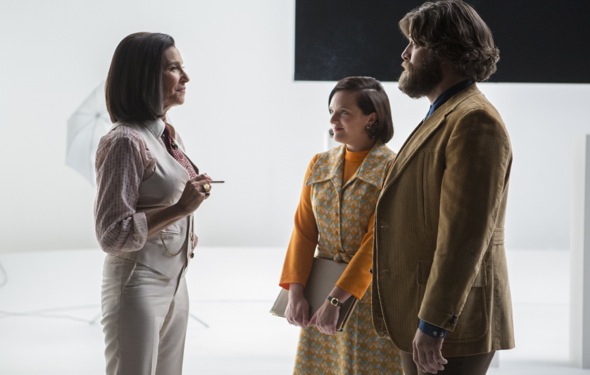
Peggy's newfound love interest from last week that seemed to be setting up her arc for the rest of the season went completely unmentioned this week, and with this week's focus on smaller and unnecessary characters like Stan and his infatuation with Mimi Rogers' guest-appearing art mogul, and Megan's extended family dealing with her divorce, as well as a distinct lack of such main cast members as, say, Don, Peggy, Joan, Roger, Pete etc. whose stories are still open-ended.


Overall, it was a relatively passive and unneeded episode, especially considering there are only five left until the end. On the other hand, I am intrigued by Don's newest mysterious romance with Diana. We've neither seen her nor heard of her at all but the man himself is sure he knows her from somewhere. I'm sure that's all leading up to some big event in the finale that will hopefully both shock viewers and offer them some closer. As for Pete, Roger, Joan and the rest of Sterling Cooper & Partners (as it's now called after various name changes over the years), they've yet to have much go on for them. I know Weiner and his crew want the show to feel more like real life than a drama, and in real life nothing big and dramatic happens just like, for the most part, nothing big and dramatic happens on Mad Men. But something has to happen at least. This is the final season, after all. We're never going to see these characters again, you'd think Weiner would've wanted to leave the dedicated followers who avidly viewed his show for the past eight years of their lives with something. Well, hope is out that he does want that and I'm just being paranoid. Maybe the plan is to escalate things from wrapping up smaller characters to wrapping up bigger characters, culminating in wrapping up Don in a big, epic finale.


"The Forecast"
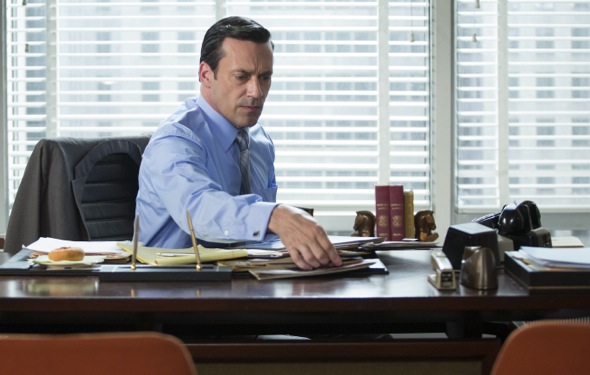
Despite a title that would have you assume it sets off the path for what's the come in the final four chapters of the Mad Men story, this week was more of the same pattern of showing what smaller, more minor characters are up to without even actually wrapping them up. No mention of Diana or Don's vague story arc. Just a ton of Sally, which would've been OK if she did anything more than use the F word after Pete foreshadowed it saying "a four-letter word beginning with F." That's another thing, the F word's been creeping in a lot lately. The fact that Matthew Weiner originally tried time and time again to get his show to HBO shows that he probably planned to use that word and more a lot more with the unrestricted language allowances on premium cable. When the show finally found a home at AMC, he had to abide by their strict one-f**k-per-season rule that Breaking Bad was also subjected to. I've always thought the toned-down, clean language made the show so classy. Now that he's using the show's popularity to his advantage and they've loosened the reins on the cursing rule, it's sacrificing some of the class. It's more realistic to have the characters swear, as people swear in real life, but I've always seen Mad Men as replicating the style of films made in the period it's set, at a time when swearing in films was highly uncommon, so it's losing that aspect too.

There was some romance for Joan (Christina Hendricks) this week, which I liked to see even though her new man is kind of demanding and bigheaded and she deserves better. Joan has always been one of my favourite characters as she's a woman in the 1960s who stands up for herself and has fought to become one of the leading partners of a major New York advertising firm. At the time, a successful businesswoman was rare, and that's what makes Joan so great. She's one of few upstanding, strong female characters on TV today (among the likes of Game of Thrones' Daenerys, The Walking Dead's Michonne, Maggie, Sasha, Tara and Carol, Girls' Hannah Horvath, and Mad Men's own Peggy), and she's wasted on this A-hole, but she seems to like him, so I digress. As long as Joan's happy, I'm happy. Creepy Glen (played by Weiner's nepotistically cast son whose name escapes me) makes a return as he is shipped off to the Vietnam War. I never really cared for Glen but Sally always liked him (inexplicably) so her emotional response was interesting to watch. At first she was angry, then made the transition to sympathetic, which she played well. Also, Don flirting with a sixteen-year-old was a tad unnerving.


"Time & Life"

This week's minor character getting fleshed out before the end: Trudy Campbell. While I love Community's Alison Brie and was happy to see her return, I'm becoming increasingly nervous about the end of the series. Can they wrap it up in time and pull off a successful ending by wasting this much time on the small characters? I'm still holding out on that one, and I'm desperately trying to trust that Weiner has some big plan to pull over everyone's heads right at the end effectively. But it's possible that won't happen, and every week it seems more and more likely it won't happen.


Pete and Trudy had a sort-of reunion, and we saw Pete's good side. This was a fantastic development, one of those moments they keep pulling out of the bag that suspends my faith that the series will go out with a bang. For eight years, Pete Campbell has been the laughing stock of the office, the village idiot at Sterling Cooper who is talked about behind his back. Here, we saw him standing up for Trudy's honour to a petty dean, and it made us stop mocking him and for once like him as a character. Plus, we caught a glimpse of the show's signature historical accuracy in that Trudy is treated as a pariah in her neighbourhood, and looked down on for being a single mother. Nowadays, being a single mother isn't a problem, and is in fact considering brave and noble. But back then, if famously accurate Mad Men is to be believed, they were disrespected. This not only educated us in 1970s history but also gave Trudy some drama to play around with before she bows out. Meanwhile, Ken kept his promise of screwing SC&P as he changed his mind back and forth on campaigns during a meeting with Pete and Don, but that's a subplot we could've gone without. I just wish Ken had left SC&P with his head held high, moved away with his wife, and become a writer. That would be a nice end for his character and get rid of him to make way for the bigger cast.


There was a glimmer of something bigger as McCann absorbed SC&P, and we saw Don's idyllic life come crumbling down as he lost his home, now his job, and failed to make an impact with one of his signature presentations. And he can't get in touch with Diana. And he walked in a gay couple getting intimate in a drunken attempt to locate her. And he and the other SC&P partners couldn't spin the news of the absorption in a positive light, causing the crowd of employees they'd gathered to disperse. They usually win, but for the first time they've lost. And this was touched on when Don was accused of being too handsome to suffer consequences for any of his actions, and until now, that was true. But now consequences are dawning, and hopefully this will keep growing for episodes to come, culminating in a tragic finale. But hey, I couldn't write Mad Men.

Monday, 20 April 2015

Fast & Furious 7 review


Plot

Deckard Shaw (franchise newcomer Jason Statham) vows revenge against Dom Toretto (Vin Diesel), Brian O’Conner (the late Paul Walker) and their crew for hospitalising his brother Owen (Luke Evans) in the previous instalment.


Review

The Fast & Furious franchise, like malt whiskey, improves with age, with new chapter seemingly competing with the last to create the most breathtakingly extravagant sequences of no-holds-barred action ever committed to film, and here it’s topped itself again. It’s to the credit of everyone involved (Diesel, Walker, returning screenwriter Chris Morgan etc.) that a series of action films with a specific focus on cars is not only still going strong on its seventh entry, but is actually stronger than it was at its 2001 inception, when it began as a street-racing rehash of Point Break that was lacklustre at best and still had two extra ‘the’s in the title. Of course there’s always the fear that following a rigid, proven formula leads to a franchise that plods along repetitively, but luckily it appears we’re still one or two films away from reaching that point.

The success is at least partly credited to the point around the fourth or fifth film when the series stopped taking itself too seriously and embraced its own absurdity, which is perhaps driven by the fierce competition that seems to exist these days between F&F and the other big summer tentpole action franchises (Mission: Impossible, Transformers, The Expendables et al) to see who can create the craziest, most OTT antics, going to great lengths to beat each other out (Tom Cruise hanging from a plane for the upcoming M:I – Rogue Nation, for example). Then perhaps James Wan was the right choice to fill departing F&F veteran Justin Lin’s shoes as director. Despite being predominantly a maker of horror films and an action movie virgin, so to speak, as scary as he made his ghostly thrillers like Insidious and The Conjuring, he did it all in the name of fun, so audiences could enjoy them. And that’s exactly what he does here, and he does it well. However, he does overuse one shot of tilting the camera at the same rate a character falls or jumps or flips, which is at first inventive and thrilling to watch, but later becomes tiresome and dizzying.

Kurt Russell was a great addition to the cast, but felt underused given his history playing the iconic Snake Plissken. They could’ve done so much more with him, but when he did get into the action he didn’t disappoint. The Rock also felt underused, but not at the fault of the film’s crew. He was shooting Hercules at the time and couldn’t make it until later on. Because of this, his character Hobbs is injured early on and doesn’t make a comeback until the end, but it’s quite a comeback. Flexing his immense muscles to bust his casts off in the hospital, he marches into the big finale with a minigun and, when asked by Michelle Rodriguez if the cavalry is coming, quips “Woman, I am the cavalry.” Statham also has some great moments as a Special Forces-trained lone wolf-type villain, as do Ludacris and Tyrese Gibson as the much-needed comic relief.

Obviously the elephant in the room throughout the film is the tragic death of actor Paul Walker that occurred midway through production, and one would expect this to hinder the enjoyment of the film. The action, however, is so engrossing that this is not the case until the end, which is a tad messy. This can be forgiven, considering the circumstances, and you have to admire the fact that they shied away from killing his character off, in a film that would’ve made doing so stunningly easy, out of respect for Walker and those close to him, a group of people which notably includes the cast. The centre of the film, and arguably the franchise as a whole, is the bromance between Diesel and Walker that exists both on and off-screen, which comes to a head in the admittedly clunky final scene. Wan and his crew delivered yet another wonderfully insane escapist action-adventure, and ended on a sweet and poignant note to honor the actor who’s been with them since the beginning. The final tribute is so touching that you forget all about that as you try to hide the tears in your eyes. Even though it probably won’t be, I hope this is the final instalment in the franchise, as it would make an emotional and fitting end, and it wouldn’t feel the same without Paul.

Wednesday, 11 March 2015

The Walking Dead Season 5 review


Thanks to a liberal dose of propulsive, bloody action and enough compelling character moments to reward longtime fans, The Walking Dead's fifth season continues to deliver top-notch entertainment.


"What Happened and What's Going On" (Episode 9)
The Walking Dead had a solid return after the midseason break, and an extremely somber one in fitting with the show's bleak tone. Rick and the survivors explored a new location, with tragic results for Tyreese. The episode was brilliantly directed, giving it a surreal, trippy, dream-like feel as Tyreese encountered the ghosts of past characters we've lost over the years. Speaking of, the plot device of all the faces showing up from the past worked because Tyreese joined them in the end. And Chad L. Coleman gave a great performance as always in his role of Tyreese, given his meatiest part in the whole series in what was tragically his final appearance. Though not new to the series, the idea of hopelessness was handled well.

"Them" (Episode 10)
With food and water in dangerously low supply, Rick and the rest attempted to walk their way to safety. I appreciate that they adapted Rick's "We are the walking dead!" speech for the show, and thought Andrew Lincoln's delivery was pitch-perfect. The "pushing walkers aside/Sasha goes nuts" set piece was pretty good. I'm also glad Aaron made an appearance as it was an intriguing and effective cliffhanger that asks a lot of questions about the future of the show. My only gripe would be that the episode pored over ideas and themes that were already well-established.

"The Distance" (Episode 11)
Tensions remained high this week as Michonne and Rick were confronted with an offer that could have been a trap. It's not the final episode, but it would've made a good season finale with its final shot of the group entering the gates of Alexandria. The final shot was great, as it made you feel hope for the characters, but also at this point, a little sceptical of this new safe haven. The only downside is that Rick's distrust was exhausting at some points, but all of this still effectively showcased Rick's huge transformation on the show over past few years.

"Remember" (Episode 12)
In this week's episode, Rick and his group of apocalypse-weary survivors investigated their new surroundings upon arrival at Alexandria. What made this a good episode for me was the fact that there was hardly any zombie action, but the quality of the writing and the eerie atmosphere created in this new location made it just as exciting and suspenseful as if there was. Unfortunately, they did add some walker scenes for the sake of it and they felt a bit forced; it would've been fine without them. Some standout scenes included the group's tense and insightful interviews with Deanna, which backtracked the series' past and showed us just how much everyone has changed, and Glenn punching Aiden, which was awesome. Daryl started to feel more distant from the crew than ever as he doesn't fit in at suburban Alexandria and prefers life on the road, making him an outsider. Still, he was up for playful bickering with Carol ("You look ridiculous!"). I don't like this new girl Enid, and I fear Carl is romantically interested in her, which means she'll stick around for a while. But Rick's final line, where he said they were going to "take" Alexandria, promised they aren't settled and there's still some great action coming up.

"Forget" (Episode 13)
While Rick and Carol hatched a plan to protect themselves, Daryl struggled to find his place in Alexandria, and it made for an interesting episode. The standout from the whole hour was Carol confronting Sam when he caught her stealing the guns ("One morning, you'll wake up and you won't be in your bed. You'll be outside the wall, far far away, tied to a tree.") It was his own fault for snooping around, following her. This gives Alexandria edge, as now there's conflict between the main cast and the other inhabitants in this seemingly safe and perfect place. I think Daryl and Aaron make a good pair, and I'd love to see more scenes with them together in the future, as they are both outcasts but in different ways. Rick awkwardly made a move on Jessie, and how that will affect their relationship in future episodes is unclear. Also, Sasha's freak out was suitably intense. This week's episode was not standalone, as it also opened up mysteries that tie into the history of the series, like the "W" carved on walkers' heads. Could this have something to do with that strange "Wolves Not Far" graffiti that's been popping up on walls and on the sides of barns?

"Spend" (Episode 14)
Our heroes found themselves in trouble outside the walls of Alexandria this week, and it was one hell of an episode! I was growing concerned that nothing happened in Alexandria and the show had become boring, but "Spend" really reminded me of just how thrilling and exciting The Walking Dead can be. The whole revolving door sequence was phenomenally done, and Noah's death was so emotional and shocking and gory, like the best-crafted character deaths on this show. I was a bit disappointed that he died, since he was always a likable character but he was just becoming a valuable asset to the group, and now his life's been sadly cut short, but I will admit it was an effective shocker. I admire the character development of Eugene finally growing some balls and stepping up as one of the heroes the other protagonists have become, like Abraham with the construction crew who wanted to leave newcomer Francine to die. And the gore was top-notch, as always from this show's fantastic and underrated makeup crew.

"Try" (Episode 15)
This week Rick really went crazy, and revealed all his angers he had about the residents of Alexandria in one big Shane-ish rant, only to be cut off by Michonne smacking him in the back of the head with a rock just as he was about to announce to Deanna their plan to overthrow her and take over the town. This is a big ending, and unpredictable, setting up what will hopefully be a satisfying conclusion to a great season in next week's finale. There will be an all-out war of Deanna vs Rick over who gets to keep the town. There were also mysteries, like Daryl and Aaron finding hints of the Wolves, who will probably have something to do with the finale, and Carl and Enid's romance is blossoming. I'm likening to Enid; I had my reservations at first, thinking she was stuck-up and potentially some evil spy for the Wolves, but from what we've seen this episode, she's just a misunderstood kid, and I get that. Unfortunately, given our past experience with Noah, when you start to like a character it means they will probably die soon. Basically, this week was a build-up to next week, when we will be seeing an extra-long, 90-minute season finale. By the laws of season finales, someone will die, that's for sure, but given this extra runtime, maybe we'll be saying goodbye to even more. Either way, it's very exciting, and I can't wait to see how the battle for Alexandria.

"Conquer" (Episode 16)
I was expecting more closure from the season finale, but I like how they've left it open to continue into the sixth season. While we now know roughly what those “W” symbols mean, it turns out to be more of a tease than anything else, setting up what’s presumably going to be a big conflict come October. Rick gave another of his famous speeches, which he does every few episodes and which keep getting stronger, however it does seem Rick has come full circle to becoming Shane. Father Gabriel attempted suicide, which was odd, first by walker which he changed his mind about at the last second, then by Sasha which she changed her mind about at the last second, unfortunately leaving him alive. Aaron and Daryl got caught in a trap, and Glenn and Nicholas (kinda) sorted out their differences in the woods. These storylines were varying degrees of effective and together they didn't amount to much. It was slightly disappointed and fell a bit flat, which might be what Abraham actor Michael Cudlitz meant when he said it would "piss off fans." Tense moments came when Glenn and Daryl almost died, but didn't. This was effective because it had the heart racing as if they were going to go without the disappointment that they wouldn't stick around in the future. However, Rick and Morgan are reunited finally and hopefully he'll be joining the main cast for future episodes, so it's not all bad.

Thursday, 5 February 2015

Fargo Season 1 review

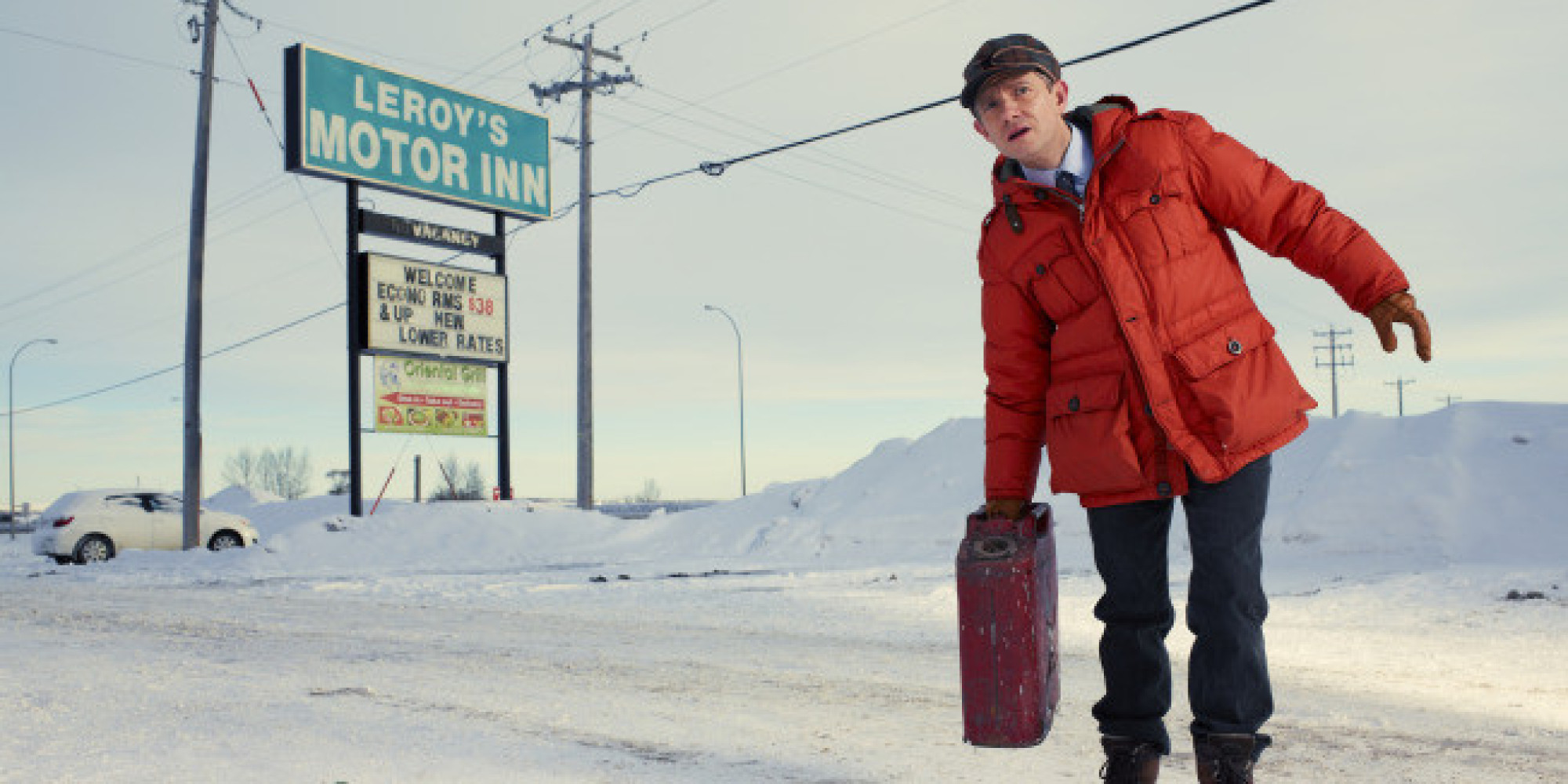
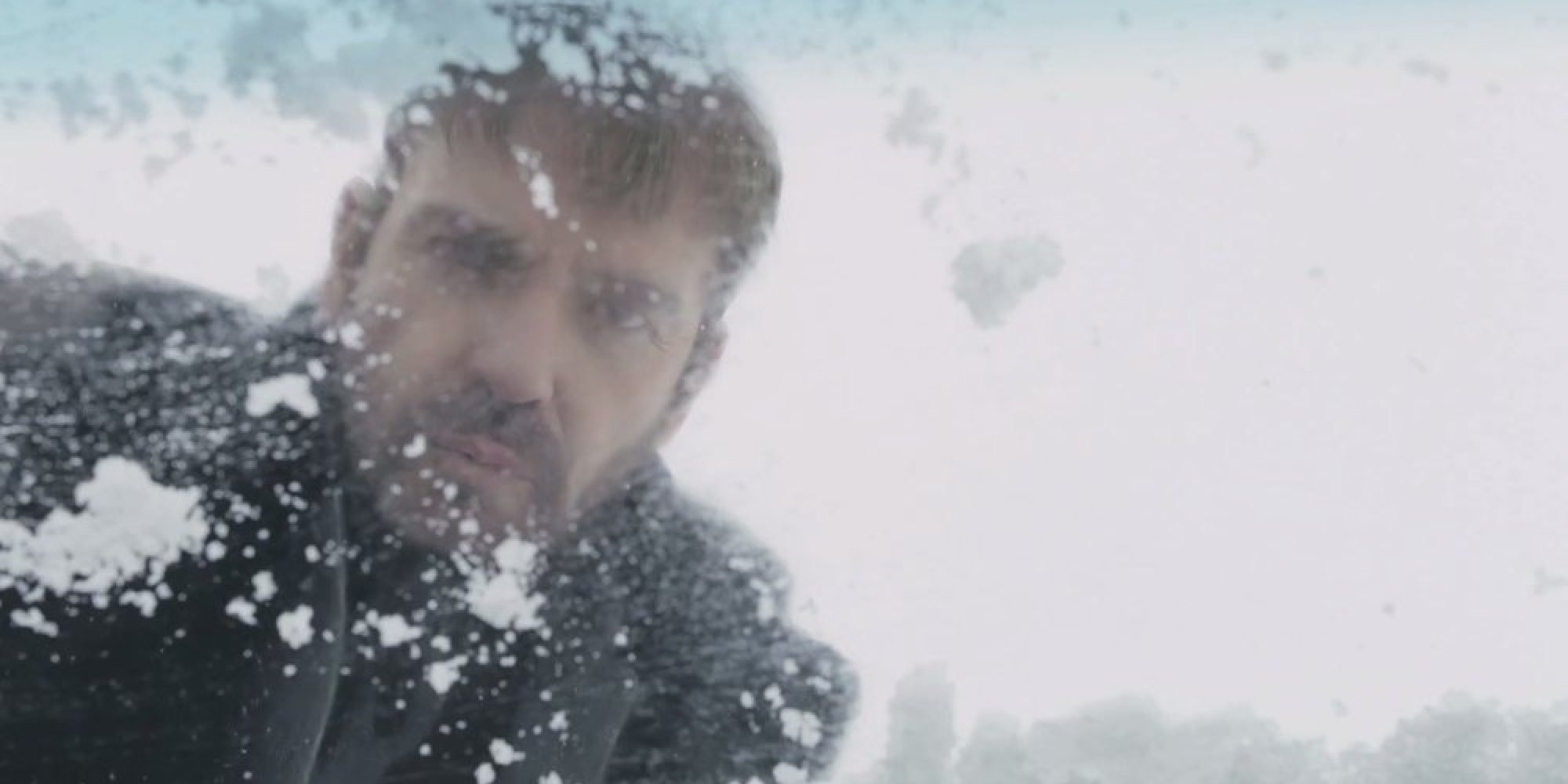
As a big fan of the Coen brothers film that inspired it, I was sceptical about the Fargo TV show. I didn't think that a TV show from different creators could match the dark comic tale the Coens told in 1996. But it totally exceeded my expectations and the first season stands alone as a great piece of storytelling. Kicking off with The Crocodile's Dilemma, the show introduces its colourful palette of rich characters, from Billy Bob Thornton's Lorne Malvo to Martin Freeman's Lester Nygaard. Anchored by fantastic performances, a respect for the original while still creating something wholly new, a fascinating cast of characters and a wonderfully dark sense of humour weighted with just enough genuine emotion, this first episode made it clear we were in for something special.
 
Then with the second episode The Rooster Prince, the story started to expand, and we got a true sense of what we were in for. This episode established Fargo as a unique show, even though its whole philosophy is emulating a previous work's familiar tone, which was refreshing, and continued to deliver, proving the benchmark set by the pilot would hold up for the rest of the run. The stellar cast continued to deliver fantastic performances in their roles. The overall structure of the series started to fall into place with this episode, which was exciting, and also makes the show ideal for future binge-watchers who can watch episode after episode. The episode teased us with Malvo's mystery tapes and gave us an interesting dynamic in a grieving Molly Solverson (who is a wonderfully intriguing character in that her good nature clashes with her old-fashioned police instincts to prove you don't have to be a brawny man to be a good cop) chasing after Lester, who despite being an excellent liar, played marvellously by Freeman, she suspects of murder, which of course as we know he is guilty of. This dynamic was as interesting as Walter White's encounters with DEA agent brother-in-law Hank.
 
In the third episode, A Muddy Road, Lester's constant fear of getting caught became the main draw of the series. Interestingly, he felt no guilt about killing his wife but instead started to make the transition from good-natured and mild-mannered to a criminal mastermind lacking in emotion. In other words, after Lester Nygaard met Lorne Malvo for the first time, he began the path from being Lester Nygaard to becoming Lorne Malvo, and it made this series a classic piece of filmmaking. Molly played some devilishly smart mind games in this episode, and we got to see just how evil Malvo is, as well as a glimpse at the conscience of Colin Hanks' Gus Grimly. It seems that every episode we learn more and more about each character, and head deeper into their psychosis. It's brilliant television, and highly enjoyable.
 
The fourth episode Eating the Blame was just, from start to finish, a thrill-ride. The hitmen duo Mr. Numbers and Mr. Wrench were a hilarious pair from the beginning, and I cracked up every time their drumroll theme came on. Their method of going out onto a frozen lake with an ice drill and threatening to throw people into the freezing water was both scary and funny, in keeping with the dark humour both the show and film became known for. It's also made clear that of the characters featured on the show, Molly and Gus represent the moral side of humanity, while Malvo and Lester represent the immoral and inhumane, showing this is a story like all great stories that is about more than just what it is about. It is a study of humanity, and a fantastic one at that.
 
The Six Ungraspables, episode five, had a particular balance between humour and drama that can at some points in the series seem somewhat uneven. Also, it had a perfectly timed comic situation befitting of this show with Lester getting himself thrown in jail for the express purpose of escaping Numbers and Wrench, only for those two to wind up being put in the exact same cell with him all night. The way they sat either side of Lester and turned to face him together, it was gold. Meanwhile, the sixth episode Buridan's Ass was the most action-packed to date, having passed the halfway point, elevating the dramatic tension with tragic consequences for Gus' inept actions in a tense, fogged-up shootout. There was some great material for Lester and Malvo to play with here, and it was probably the best-looking episode so far, directed with serious visual style, achieving best visually what the rest of the show has attempted to do.
 
By the seventh episode Who Shaves the Barber?, Lester's transformation into a heartless monster like Malvo is almost complete. The whole opening sequence of Lester making up a whole story to the cops that frames his brother, and then ignoring his incarcerated brother on the way out with a sick smile and cut to the main title was just breath-taking, and the greatest opening scene of any episode yet, as well as the longest, and with a very valid reason. Here we get to see Malvo pretending to be friendly, which is so unnerving because we know his true malevolent nature, and the subtle transformation of Lester comes to a head, much like Walter White's transformation did towards the end of the third season of Breaking Bad in the final moments of the episode Half Measures, but here it was as the start of an episode and they made it work in terrific fashion. The only gripe I might have is that Molly rehashed Marge Gunderson's speech from the original film in this episode and it didn't quite work, but other than that, some terrific and well-written dialogue this episode.
 
While Fargo made itself known for taking unexpected twists and turns in its first seven instalments, it outdid itself on the unpredictable midway through the eighth episode The Heap when the story jumped forward a year out of nowhere to a time when Lester has re-married, Molly and Gus have married, and Malvo is strangely nowhere to be seen. This was a smart twist because if the story was becoming stale, they could shake it up a lot by giving a whole new Lester with a much improved life, winning Salesman of the Year at an insurance convention in Vegas and having a beautiful, loving wife, he has become a lot more outgoing and confident in his own skin. If it took murdering his first wife and framing his brother for it to improve himself, so be it. The final twist of Lester catching Malvo in a Vegas bar on a couple's night with his fiancée and their friends, who all refer to him as "Dr. Michaelson", was confusing but incredibly intriguing. Ever since the time jump, we all had the question on our minds, "What has Malvo been up to in the past year?" And with this ending, it's not revealed exactly what he did, but one thing is clear: he's been up to a lot.
 
The first part of the ninth and penultimate episode A Fox, A Rabbit and A Cabbage was dedicated to explaining what Malvo was up to, building a cover as part of a hit. He feigned falling in love and making friends for an entire year, building up to simply gunning them all down right in front of Lester and thinking nothing of it. If we thought Malvo had even the slightest inkling of human emotion deep down, those thoughts were completely cast aside by the sounds of three gunshots and the sight of a lot of blood and a careless expression. This is all down to a consistently fantastic performance by Billy Bob Thornton, as not many actors could make a killer who feels nothing (ie Dexter Morgan) that we actually care about. There's a real intensity that comes from that elevator scene, so harsh that it snaps new Lester back into reality and sends him and his wife back home immediately, and gets Molly back on his trail. This was the perfect setup for a strong conclusion, proving that the unexpected time jump was absolutely necessary for the telling of the story, as if Lester hadn't had that time to transform himself and Malvo hadn't used it to create a life around his latest hit, it would have played out entirely differently, and one can only wonder.
 
And finally, the first season of Fargo ended with Morton's Fork, arguably the best episode of the series. Finales are tough - almost every finale in the history of TV has been controversial. Some are done well with a fitting conclusion to a terrific series (Breaking Bad, The Office, Cheers), some are polarising in that they are so outlandish the fans are split between those who think it was good and those who think it was terrible (Lost, How I Met Your Mother, Seinfeld), and some are handled terribly and fall flat in their attempts to be unpredictable (Dexter, The Sopranos, The X-Files). Thankfully, Fargo's long, sprawling tale of crime in a gloomy and dark world came to an end in a totally unexpected way that was also the perfect ending and befitting of the show and its themes (without wanting to give too much away). Each character confronted their own inner demons and wrapped up their story arcs brilliantly.
 
Overall, this TV adaptation of a classic film surprisingly turned out to be one of best shows of the season, due in equal parts to excellent casting, its thematic connections to the original film while at the same time existing as its own entity, stunning writing and craft, the way it is shot and framed perfectly capturing the cold Minnesota plains and creating the dark tone that became the trademark of the series, and culminating in a completely unpredictable but fitting end.

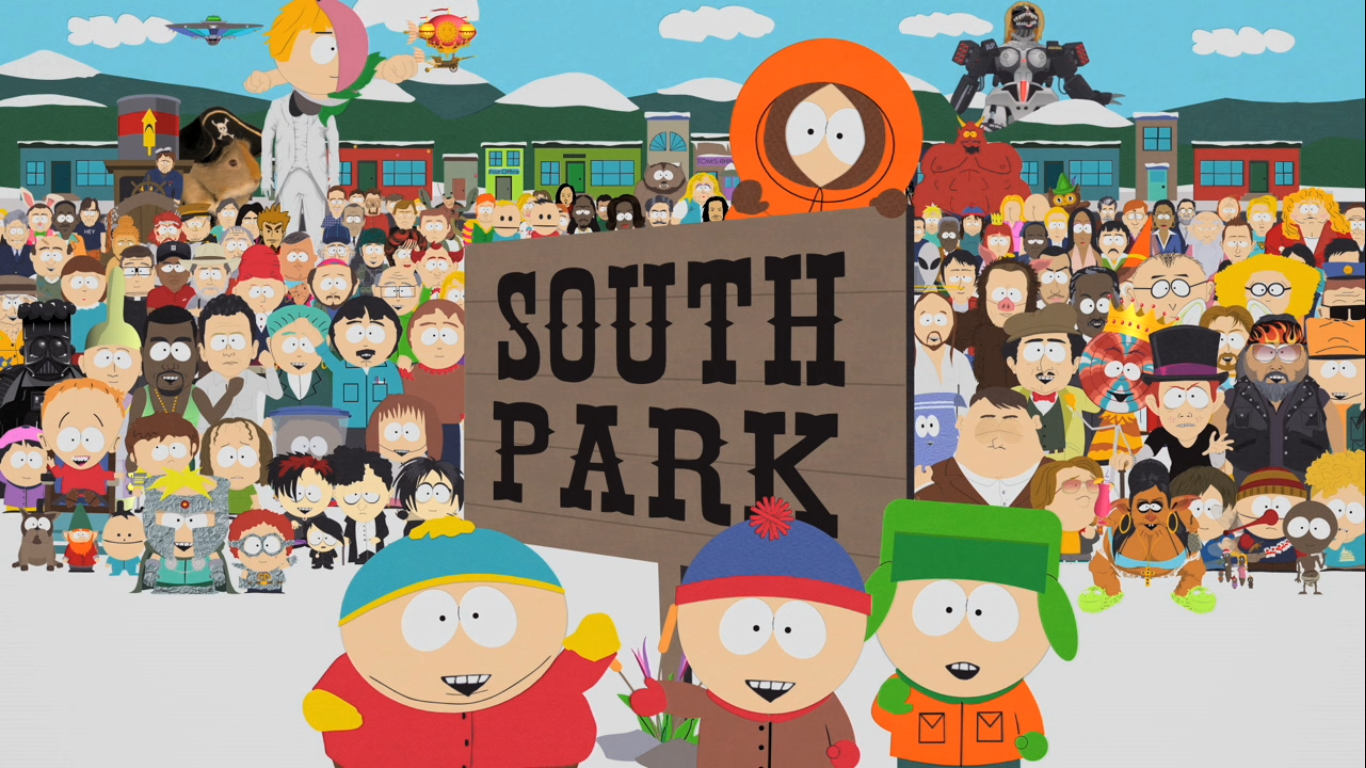
South Park Season 18 review

This was a terrific season of South Park, showing that even after running this off-colour satirical dark comedy for eighteen years Trey Parker and Matt Stone are still far from running out of steam. They took on some hot button current issues such as drones, Kickstarter and gluten-free diets in typically hilarious fashion, and with each episode made just days before it is broadcast, tuning in each week it felt very fresh and current. This season the writers experimented with episode-to-episode continuity, rather than the usual formula of resetting each week, so each episode calls back to previous episodes, which was engaging, and we got to see what it was like for the characters to face the consequences of their actions, funny and also a new brand of humour for the show.


Go Fund Yourself


Stan, Kyle, Cartman, Kenny, and Butters abandon school to run a start-up company.

This was weak for a season premiere, lacking the wow factor of some of the more classic episodes like "Scott Tenorman Must Die", "Casa Bonita" and "Imaginationland", but it was still a funny take on the world of Kickstarter, as the boys take the name Washington Redskins and con people into investing in their business with the explicit goal to do nothing and live off their money. It slowed down in some areas, especially when the story focused on how this affects the Redskins football team, but on the whole it was a good episode, but fairly weak for the first in the season.


Gluten Free Ebola


Mr. Mackey annoys everyone by talking non-stop about how he has stopped eating gluten. After witnessing what can happen to those who consume gluten, the town resolves to give up gluten themselves.

This was a great return to form, it was classic South Park. Perfectly mocking those who obsess over eating only gluten-free foods, it also lampoons ebola, which was an important topic at the time. For example, when Randy is exposed to gluten he is quarantined with the others in a pizzeria (because pizza contains a lot of gluten), much like the ebola victims were quarantined. Only South Park can make a father being forcibly separated from his son funny, and here they do. They also poke holes in the logic behind the gluten-free fad, like when Randy is throwing out all foods containing gluten and checking the label for ice cream, says "No, ice cream's good for you," because it has no gluten.


The Cissy


In order to use the girl's bathroom and escape the crowds in the men's room, Cartman announces he is transgender. Meanwhile, Randy struggles with his dual identity as Lorde.


This episode was funny and also a poignant look at the world of transgender people. While it was classic Cartman to pretend he is a woman trapped in a man's body so he can use the girl's bathroom, the real standout of the episode was Randy revealing he has a secret double life as pop singer Lorde, starting a story arc that would last the whole rest of the season. It was completely random and made no sense why they would do this story, but that's what made it so hilarious and unexpected. Also, after "Dances with Smurfs" and last year's "The Hobbit" I'm started to appreciate Wendy more as a strong female voice on the show, and she's becoming a very good character in a show lacking in real, non-satirical feminist views.


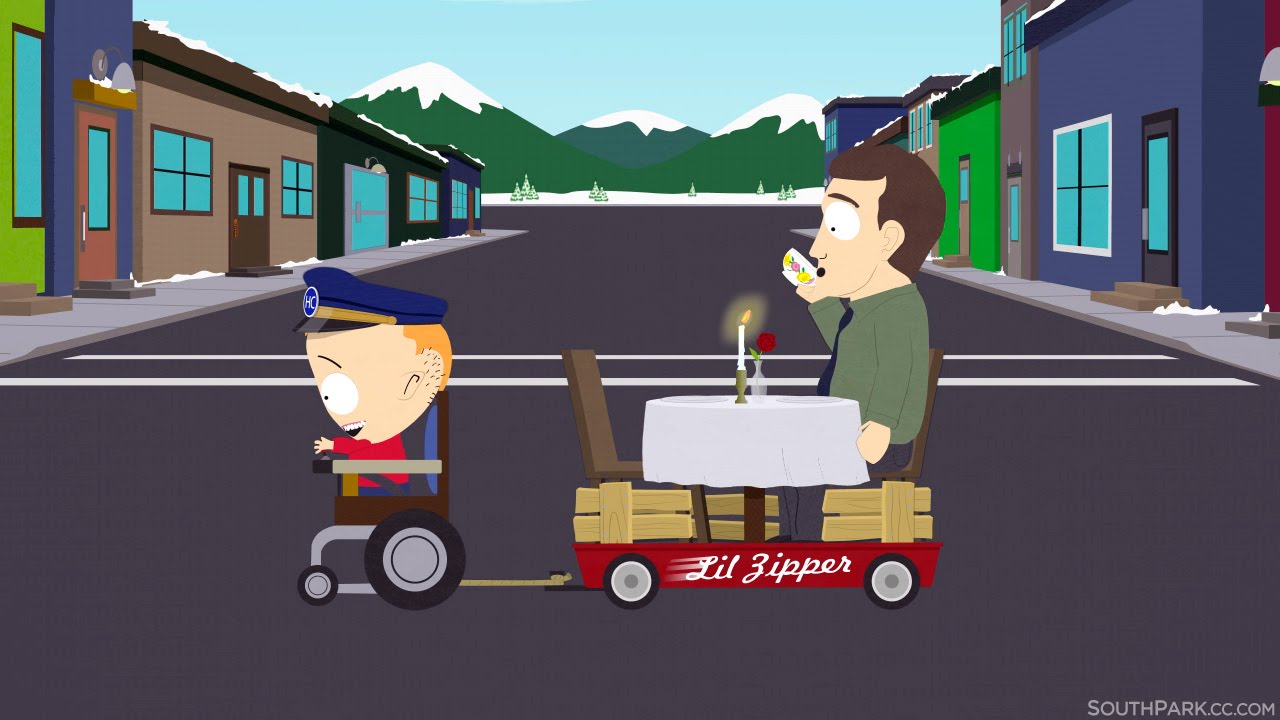
Handicar


Timmy starts a new transportation service to raise money for summer camp. Based on the mobile app called "Handicar", the service becomes town's number one mode of transportation.

Given the season had been hilarious up until now, this fourth episode was quite a let-down. The same happened with this year's season of The Walking Dead, which was shaping up to be the best season so far until the fourth instalment. Recycling the plot of "Crippled Summer" with Nathan and Mimsy trying to sabotage Timmy's new business, it became painfully unfunny from the get-go. Luckily winning parodies of Matthew McConaughey's Lincoln adverts and Wacky Races managed to save this episode from falling completely flat but on the whole, it was disappointing and mediocre from a show where a lot more is expected.


The Magic Bush

Cartman and Butters fly a drone around South Park. Before long, publication of the first thus produced video (featuring Craig's mother) turns the town upside down.

This episode was a parody of the invasion of privacy that comes from the recent commercialisation of drones, and it achieved that very well. Stephen Stotch brought a lot of humour in his role as Butters' father. While his angry character constantly grounding Butters has become stale, this offered a hilarious new take on him as a father who considers it unfathomable that his son would disobey him, rather believing his drone has gained a mind of its own. "Is it possible your son used the drone?" the clerk at the hobby shop asks. Stephen replies, mystically and suspiciously, "No, that's impossible. Butters isn't allowed to use the drone without my permission." It was very funny and made the episode, though the frequent references to Craig's mom's "bush" were just too vulgar, even by South Park's standards.


Freemium Isn't Free


Stan is addicted to the new Canadian Terrance and Phillip mobile app, leading him to first-hand experience of the freemium concept.

While this episode successfully links mobile gaming addictions to alcohol and gambling addictions with the show's trademark satirical jab, the beginning of the episode was dragged down by the unwelcome return of Terrance and Phillip. However, once it got going it had a lot more to offer, with a satirical alcohol advert ("You! In a tuxedo! F**king this girl! Drink, drink, drink!") and a hilarious cameo from Satan. The underlying theme of freemium games scamming users into spending a lot of money on them is a fun topic for the show to dig its teeth into, and they do this surprisingly well with a convoluted government plot uncovered explaining the scam, but this is explained a few too many times and it becomes repetitive and loses its comedic edge.


Grounded Vindaloop

Butters believes he's living in a virtual reality after Cartman tricks him into using a VR device he has constructed.

This week South Park took on the growing popularity of virtual reality and Oculus Rift using parodies of such science fiction films as The Matrix and Total Recall to take viewers on an intense head trip that was crazy, enjoyable and most importantly, very funny. The story started out with Cartman convincing Butters he was in a virtual reality to get Butters to do some outrageous things, and it seemed like this would continue for the rest of the episode, which would have been funny but rather run-of-the-mill South Park. Instead, like they do with the best episodes, Parker and Stone took an unexpected turn and revealed that Cartman himself was in a virtual reality, and then that Stan was, and then Kyle, and they played on these sci-fi themes to blur the line being reality and virtual reality. And also, the racial stereotype Indian customer service guy for Oculus Rift Steve was a highlight, as his desperate attempts to keep customers on the phone and help them out were very funny.


Cock Magic


Kenny excels at playing a trading card game. Meanwhile, Randy rediscovers his talent in eponymous cock magic.

Like many great South Park episodes before it, "Cock Magic" was inexplicably random and came completely out of nowhere. The title refers to two phenomena - the 'Magic: The Gathering' equivalent of cockfighting, and Randy's college skill of performing magic with his penis. These are both wildly surreal concepts and also work surprising well, especially with the drumroll that accompanies Randy's tricks and illusions. Also, I admired how both types of cock magic wrapped up their stories by overlapping with each other, much like classic Seinfeld episodes do, where South Park usually have two separate plots with two separate endings, so this was a nice change of pace.


#REHASH


Kyle wants to play games with Ike, but Ike doesn't want to play with him anymore.

Part one of the two-part season finale, this felt like a particularly special episode as it started to wrap up the various plot elements of this season, making references to Lorde, gluten, freemium games and cock magic, as well as being contained in its own plot satirising Twitter trends. It was funny in just how crazy the idea of Cartman taking to YouTube to comment on YouTubers commenting about people commenting about comments, and the level of absurdity they took this to. It gets a little carried away in its making fun of the use of holograms of dead celebrities in concerts, using holograms of Michael Jackson, Tupac and eventually Randy in some record company's insane Terminator spoof plot to control the media. This made an interesting social statement but the story came out of nowhere and wasn't really necessary. The underlying message, however, about how TV and video games are no longer the worst addiction for kids, and that Let's Play videos on YouTube are taking over and kids need to go back to the TV, is a confusing and strange one, but relevant and tackled comically.


#HappyHolograms


Kyle organizes a Holiday Spectactular while holograms run wild in South Park.


The feeling I got from this episode is that the hashtag/holograms storyline didn't need two parts and could have been done as one solo episode, but regardless of that, this second part did offer some hilarious parodies of celebrities like Iggy Azalea, Taylor Swift and (for some reason) Al Pacino. It also made fun of the police shooting of Michael Brown, with the cops making a number of racist comments and the captain ordering his officers to shoot and choke any African-American they come across, which were a little disconcerting given how soon after these events it aired, and were too obvious to be funny. I did find the jokes about Bill Cosby's sexual assault claims funny, however, as it was worked into the Christmas Special song and was done more subtly. The climax of Cartman taking over the world with his hashtag and becoming "trend-scendent" was very funny and a fitting conclusion to an overall great season.

Tuesday, 27 January 2015

New releases - January 2015

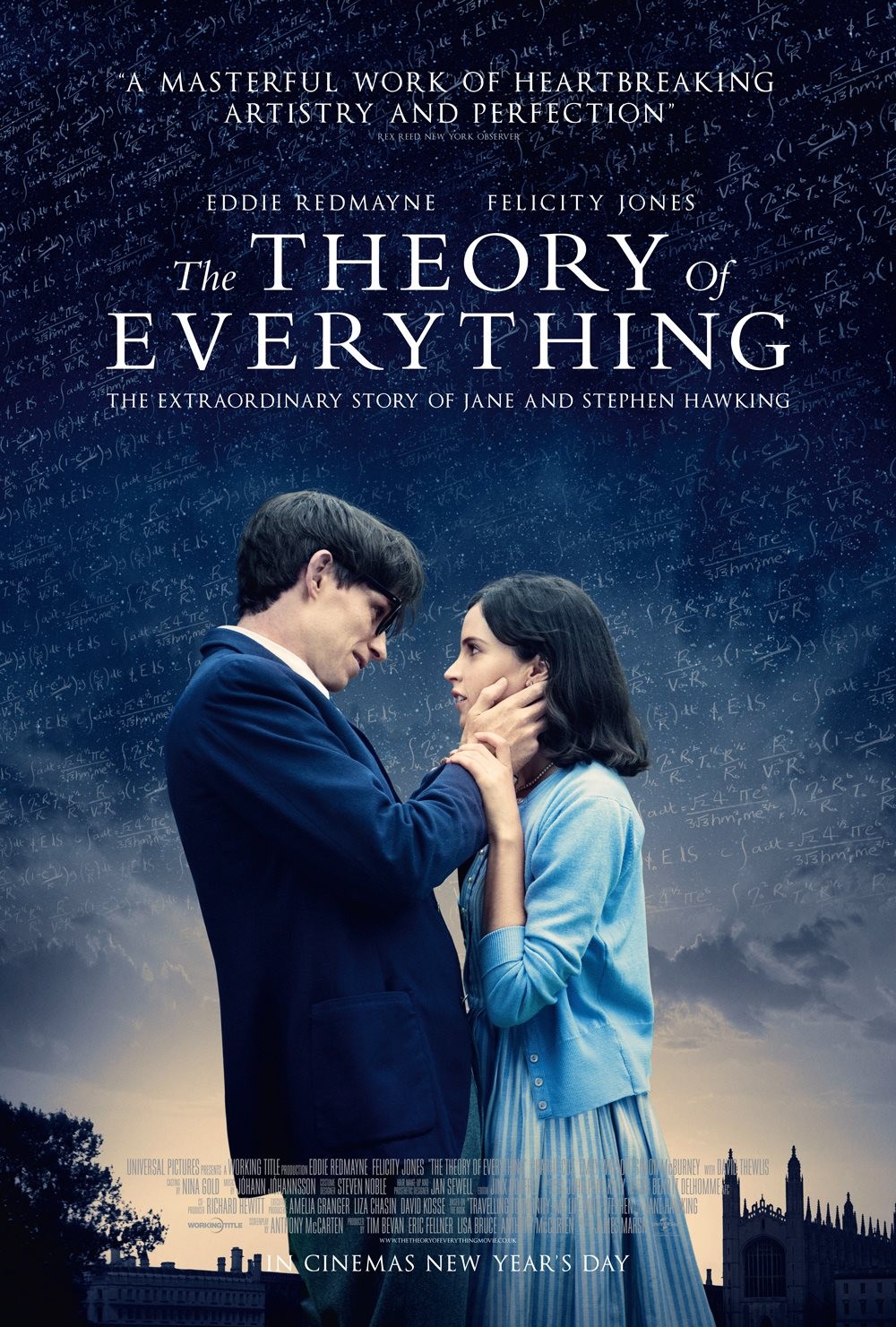
The Theory of Everything
4/5
Director:
 James Marsh | Starring: Eddie Redmayne, Felicity Jones | Running time: 123 mins | Certificate: 12A

I think this was a very good film. While I would have preferred a film about Hawking showing what a brilliant genius he is rather than this story focused on his relationship with his wife, I enjoyed the aspect of the story about him coming to terms with his disability and how the character retained a lot of Hawking's qualities, like his sense of humour. Eddie Redmayne did a great job playing Stephen Hawking. You actually believe he is disabled and slowly losing the ability to do anything, while also conveying genuine emotion. The directing is pretty generic, compared to the year's more visually inventive directors like Grand Budapest's Wes Anderson or Birdman's Alejandro González Iñárritu who actually play around with the camera. Overall, it is worth watching for Redmayne's performance, but not much else.

Birdman
5/5
Director: Alejandro González Iñárritu | Starring: Michael Keaton, Zach Galifianakis | Running time: 119 mins | Certificate: 15


Everything about this film was great. The cast was phenomenal (Michael Keaton and Edward Norton particularly), the writing was enjoyable as it was darkly comic and also gave an interesting character study of a failed actor and a mid-life crisis, and the direction and editing made the film seem like one seamless shot, which was definitely fun to watch. Definitely not one to miss. (Also, without giving too much away, my theory is that the ending didn't actually happen. It was all in Riggan's head during the last shot before it. Watch it and see if you agree with me.)


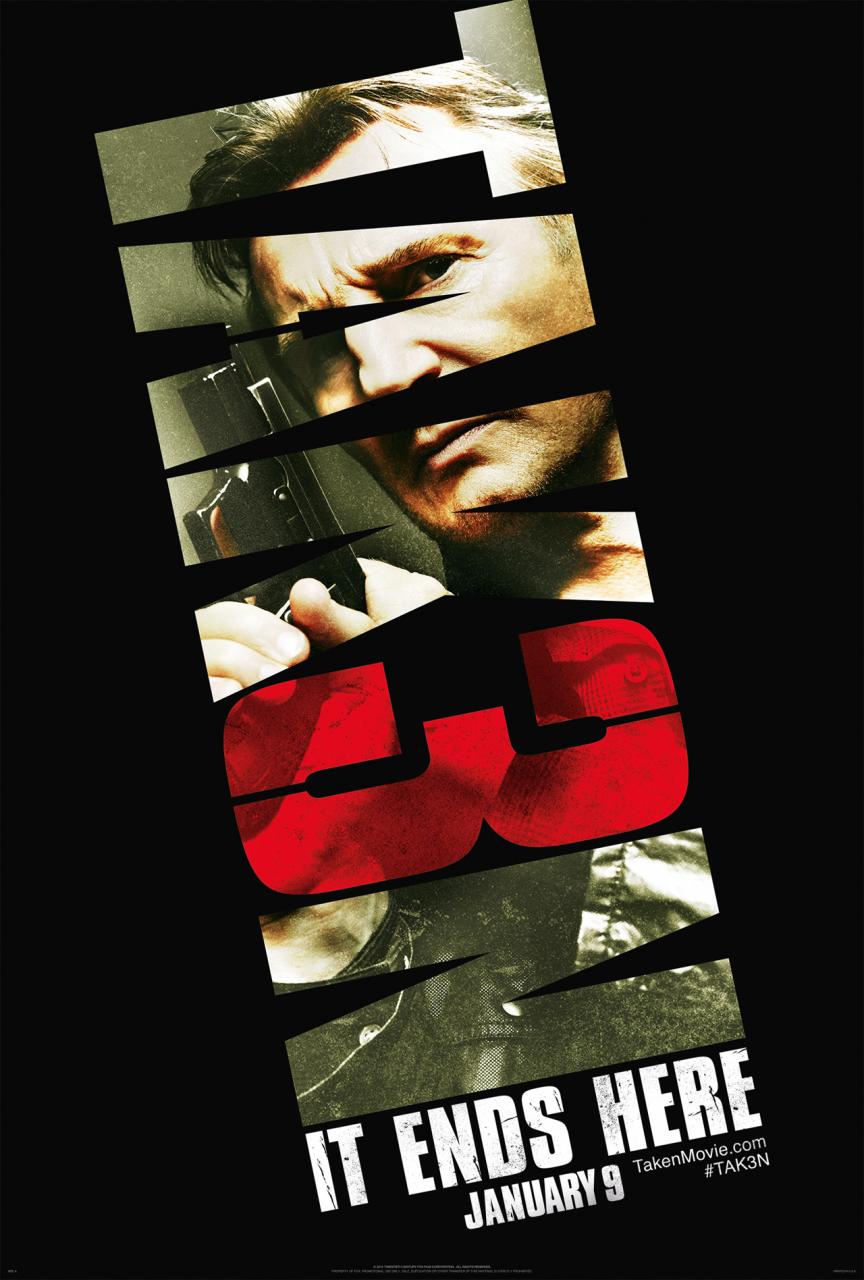
Taken 3
2/5
Director: Olivier Megaton | Starring: Liam Neeson, Maggie Grace | Running time: 109 mins | Certificate: 12A

The trilogy that made Liam Neeson an action star reaches its conclusion with a sloppy, lazy mess following Bryan Mills on the run after being framed for the murder of his ex-wife. The action that was once exciting in 2008's original Taken is now silly, such as driving a flaming car into a lift shaft, because the original was an extreme hardcore 18-rated thriller, and toning it down to a childish 12A has taken away all the impact. Neeson is a terrific actor, but the rushed camera movements and choppy editing cut up all his dialogue to the point you can hardly make out what he's saying. There are many inconsistencies and plot-holes, which drag down the realism that once existed, and LA does not make as compelling a setting as Taken's Paris or Taken 2's Istanbul. Bryan and his daughter riff on the idea of being "predictable". They also call the pot black. Long story short, if you thought Taken 2 was bad, get a load of this.

American Sniper
5/5
Director: Clint Eastwood | Starring: Bradley Cooper, Sienna Miller | Running time: 132 mins | Certificate: 15

This is certainly a film with some wow factor. Despite some problems with the editing that don't make the difference between flashbacks and present day abundantly clear (like Lost does), Clint Eastwood directed a fine movie. There's a theory that he's trying every genre from boxing films (Million Dollar Baby) to westerns (Unforgiven) to musicals (Jersey Boys), possibly to find his calling. Well, he may have found his calling in directing scenes of war. He makes such powerful visuals and captures the actors' emotions so well that his battle scenes here are all at once visceral, poignant, breathtaking and moving. Bradley Cooper is perfectly cast as Chris Kyle, dubbed the "most lethal sniper in US military history." The amount of weight he gained shows his commitment to the role, which he plays fantastically in making us feel sympathy for a killer. Sienna Miller is annoying as his wife and the film seems over-long despite Eastwood succeeding in creating an interesting and engaging story from start to finish because the climax comes to soon. Otherwise, this is a brilliant film, especially because of Cooper's award-worthy performance.


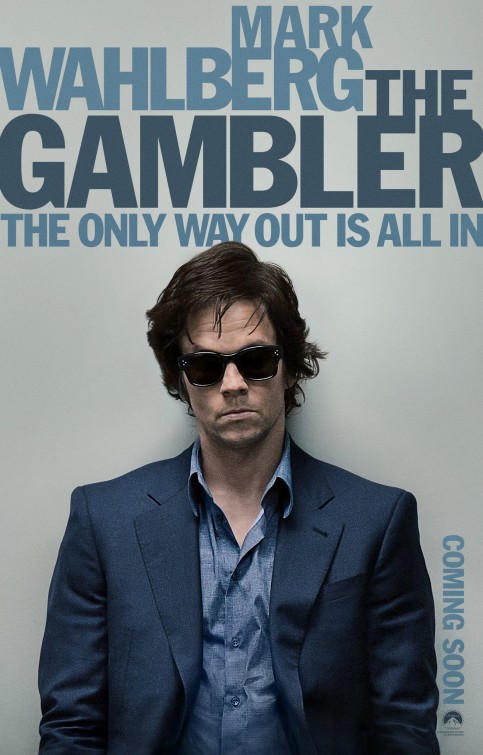
The Gambler
1/5
Director: Rupert Wyatt | Starring: Mark Wahlberg, Brie Larson | Running time: 111 mins | Certificate: 15

Good actors like Mark Wahlberg and John Goodman have been wasted here. We're supposed to feel sympathy for this guy who isn't likeable at all and was stupid enough to get himself into debt, but there's no real threat because he's a spoilt rich kid sitting on a massive inheritance nest-egg that he just has to get his mother (played brilliantly by Jessica Lange) to give it to him early, which she does. Just don't waste your time and leave this one well alone.

Big Hero 6
4/5
Director: Don Hall | Starring: Ryan Potter, Jamie Cheung | Running time: 102 mins | Certificate: PG

Big Hero 6, loosely adapted from the little-known Marvel comic, follows the story of a young boy as he teams up with a loveable robot to avenge his brother's death. It's a lovely story, and another delightful animation from Disney. Like the best animated films, such as Bambi, it is in equal parts funny, touching, cute, and sad, and plays with these emotions naturally. It's never forced. If it's funny, it's funny for a reason, and if it's sad, it's sad for a reason, so the film and its characters are all the more relateable. Baymax steals the show, the "huggable" robot who is programmed to be so kind and good-natured it is impossible to dislike him. This is a terrific film to be enjoyed not only children but their parents as well.

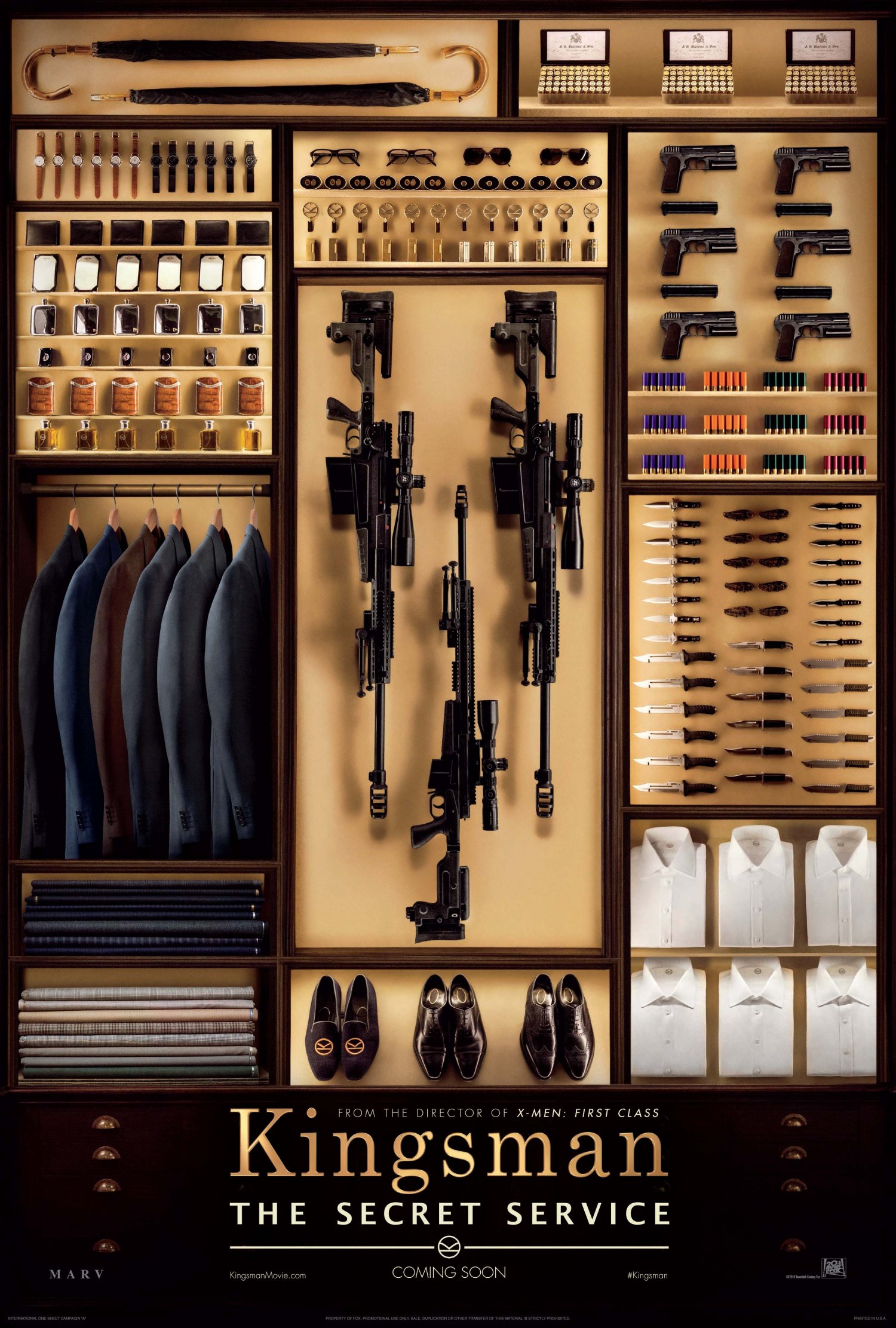
Kingsman: The Secret Service
4/5
Director:
 Matthew Vaughn | Starring: Colin Firth, Taron Egerton | Running time: 129 mins | Certificate: 15

In Kingsman: The Secret Service, director Matthew Vaughn once again proves that he excels in taking well-established -- one might even say tired -- genres and tropes and reenergizing them with his patented blend of wit, reverence for what has come before, and hyper-violence. The film is a love letter to old-school spy movies, but one that's modern and smart, subverting the clichés and shocking the audience at times. The cast is fun and gives good performances, Samuel L. Jackson in particular making an evil megalomaniac with a lisp bent on world domination both devilish and likeable. Vaughn directs some fine stylised action sequences and the film is designed well. Overall, Kingsman takes the super-spy genre of yesteryear and reenergizes it with wit, reverence, fun and hyper-violence. Warning: might offend some.